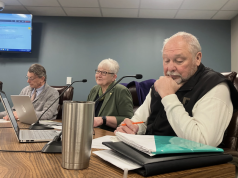


























The Nebraska State Patrol arrested Becky Stamp in November for theft while serving as a court-appointed guardian.

Written by Alyssa Johnson
A disability rights advocacy group is calling for change after a Nebraska woman was arrested and charged with multiple felonies for allegedly stealing thousands of dollars from a vulnerable adult in her care.
Becky Stamp, 56, of Bradshaw, is accused of stealing more than $20,000 from a 57-year-old man in York County through her position as the man’s court-appointed guardian.
At the time of her arrest, Stamp was the court-appointed guardian for more than 30 people across 16 Nebraska counties stretching from the Panhandle to the eastern part of the state, including five in Lincoln, according to a Monday news release from Disability Rights Nebraska.
Guardians are people appointed by courts to make personal and financial decisions for vulnerable people who can longer look after themselves.
According to court records, Stamp was only authorized to pay the man’s bills and move money to a spending account.
Instead, she allegedly spent more than $20,000 at places in York like Walmart, Dairy Queen, Pump & Pantry, Walgreens and Runza between April 2024 and last October. At times, money was taken out of the man’s account while he was incarcerated at the York County Jail or housed at a CenterPointe facility.
The Nebraska State Patrol arrested Stamp in early November and booked her in the York County Jail. She was charged with theft by unlawful taking of more than $5,000, unauthorized use of a financial transaction device in excess of $5,000 and abuse of a vulnerable adult. She was released after posting a $15,000 bond and has a court hearing set for Jan. 28.
Amy Miller, an attorney with Disability Rights Nebraska, said in the release the “scandal” should prompt immediate reforms of the state’s guardianship system, pointing to a new report that laid out red flags in Stamp’s case and gaps in oversight.
The group alleges Stamp failed to file annual reports explaining her services and handling of client finances and was late to finish required training. Stamp had also been sued over debt collections several times, including a claim for more than $10,000 that was brought around the time of the alleged thefts in York County, the group said.
Stamp also served dozens of clients from Scottsbluff to Omaha as part of a one-person, for-profit guardianship company she opened just outside of York in 2022, the group said, which would make regular check-ins difficult.
Advocates also cited complaints from other clients of Stamp, including an 82-year-old Lincoln man who was evicted from his apartment when Stamp allegedly failed to pay his rent.
Another client of Stamp’s in Lincoln County requested to have a new guardian because “my current guardian doesn’t check up on me or talk to me. She doesn’t help me with anything.”
The report said that Stamp has been removed from some cases in Lancaster and York counties, but she has been allowed to continue to have authority over others.
Since her arrest, the report said some judges have begun to suspend her guardianship and put new guardians in place.
“These are public dollars at risk: State, federal and county funds pay guardian fees and taxpayers deserve strict oversight of the money,” the report said.
‘Unfettered power’
In 2024, Disability Rights Nebraska issued a similar report that found gaps in the guardianship system across the state, including how for-profit guardians handled money and the well-being of Nebraskans with disabilities.
“Once a court puts someone under full guardianship, the appointed person makes virtually every decision for the person with a disability and has nearly unfettered power over the life,” the group said.
The 2024 report found guardians with a debit card were allowed to charge up to $500 in the client’s money with no accounting and guardians were being paid thousands of dollars each year for their services without itemized explanation to the court of their time spent for each client.
Some elderly and aged Nebraskans were moved by the guardian to cheaper nursing homes far away from their friends and communities and were never visited by the guardians, the group claims.
Finally, Nebraskans with serious mental illness or developmental disabilities were assigned to a single guardian with a caseload over three times the limit of 20 clients.
Dianne DeLair, the group’s director of legal services, said that more than 10,000 Nebraskans are currently under full guardianship.
“Our current system does not have enough oversight to ensure the guardians are providing quality support and handling their client funds honestly and transparently,” DeLair said. “Until Nebraska adopts the modern commonsense reforms that are working in other states, Nebraskans with disabilities will continue to be vulnerable to negligent and predatory guardians.”
Some of those proposed reforms include limiting how many clients a guardian can take on. Currently, there is no limit for private citizens, while state workers who serve as guardians have caseload limits of 20.
Disability Rights Nebraska would also like to require auditors to review financial accounting and require physical visits by guardians.
“We can’t afford to wait for yet another scandal or tragedy: we need guardianship reform now,” Miller said.