


























Community College attraction growing due to soaring tuition costs
There’s a new nationwide trend evident in the Heartland graduating class of 2026. Of 30 graduates, 16 chose to attend a community college.
After talking to several Heartland graduates who are attending a community college rather than a four-year college, their top reason for their choice was economic.
“Our students looked at tuition and room and board costs, and tried to find a way to get the most education for their money, because it is so expensive,” said Heartland High School Counselor Kelsey Vnoucek. There is a large price difference between attending a community college and an in-state four-year school.
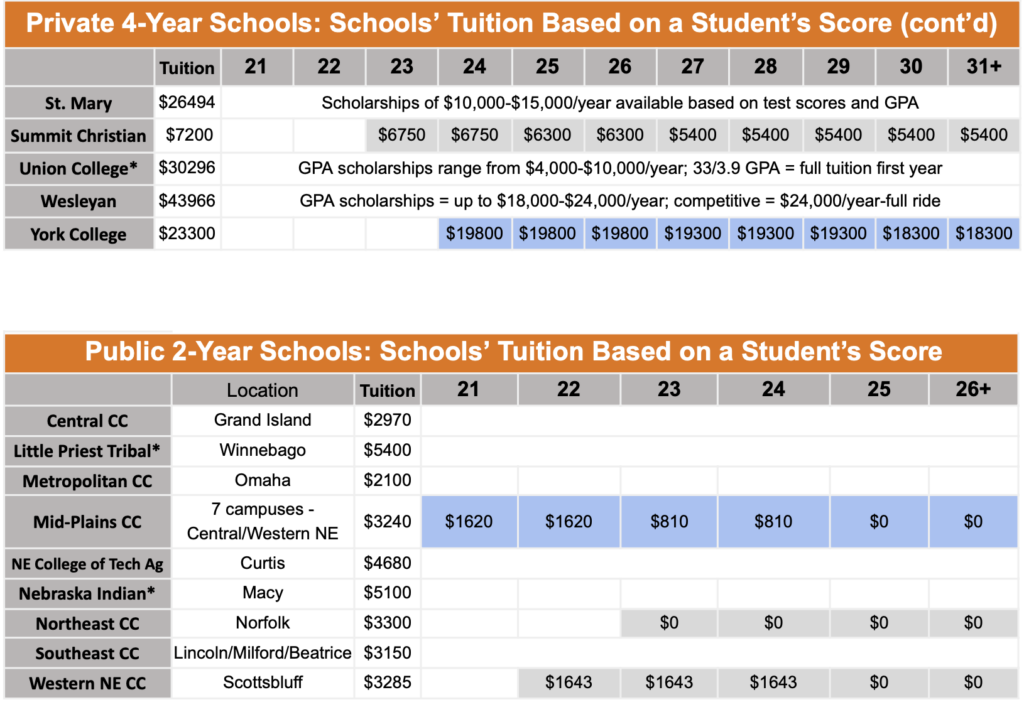
Below is a chart that Vnoucek shares with students when they start their OnToCollege ACT Preparation program. The listed costs don’t include housing and meal plans, which can range from $8,500 to $14,000/year. The top gray box with numbers is the costs based on test scores. Blue boxes signify automatic scholarships (as listed on the college’s website) based on GPA and class ranking.
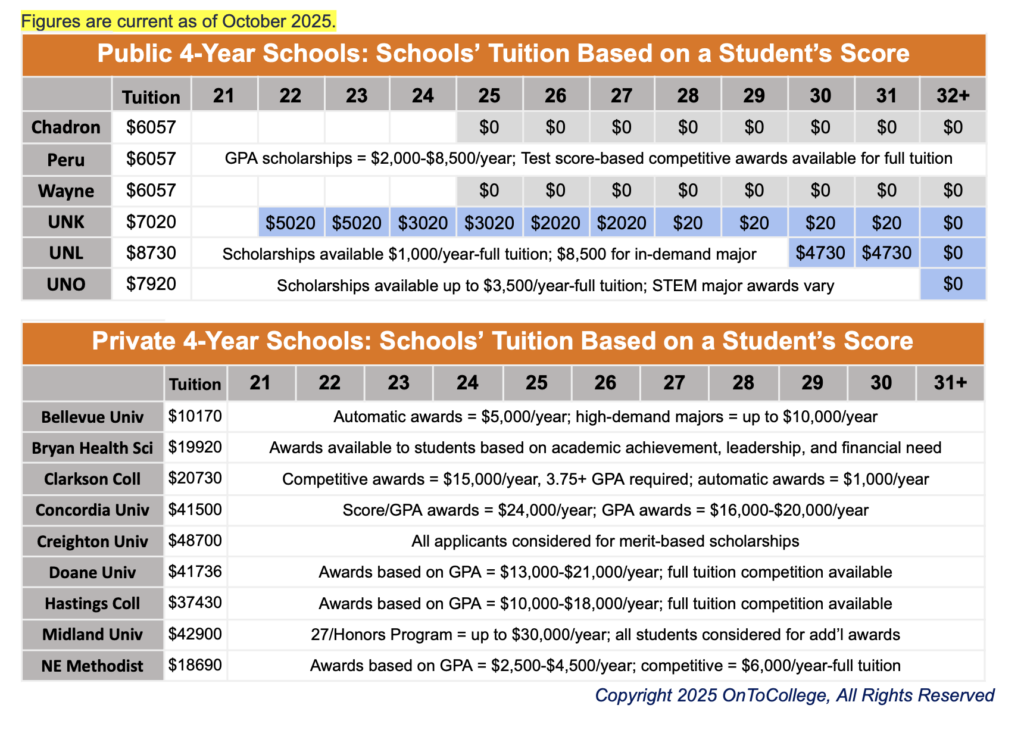
“For a lot of our kids, there is a huge price difference between $10-12,000 for community college and up to $25-30,000 for a four-year school,” said Vnoucek.
Hallie Tessman is one of Heartland’s graduates who will be attending Southeast Community College in Lincoln, majoring in business. She initially considered attending UNL after touring there and thought it would be fun, but changed her mind after comparing the plans and costs.
“After talking to Ms. Vnoucek, the school counselor, and looking at the different plans, I saw that doing two years in community college before transferring to UNL would actually be cheaper. I thought that would be a good idea because I wasn’t exactly sure what I wanted to do. My interest in pursuing a business major was from participating in FBLA,” said Hallie.
Vnoucek also credited the personal finance classes students take at Heartland for helping them choose a community college. “They are learning that starting out in a lot of debt is a bad thing, and they want to work hard to put themselves in a good spot.”
Nebraska’s strong and large community college system
Nebraska community colleges include Southeast Community College with campuses in Milford and Lincoln, Central Community College in Grand Island and multiple locations, Northeast Community College in Norfolk, Metropolitan Community College in Omaha and Fremont, Mid-Plains CC in McCook and multiple locations, NE Tech Ag in Curtis, Nebraska Indian in Macy, Little Priest Tribal in Winnebago, and Western CC with campuses in Alliance, Scottsbluff, and Sidney.
Several of Nebraska’s community colleges consistently earn top marks in affordability, career placement outcomes, and graduation/transfer rates. Southeast CC, Metropolitan CC, and Mid-Plains are the top three institutions according to college ranking platforms.
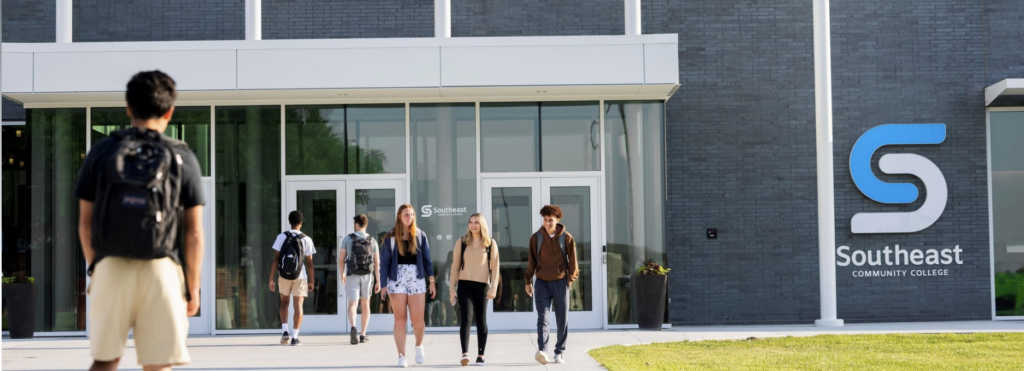
Southeast Community College had a 12% increase in enrollment of 10,601 students at all three campuses as well as its dual credit and prison education programs – photo SCC website
Southeast Community College in Lincoln has limited dorm space, but Hallie applied early enough and secured housing in its dorm. Another one of her classmates, Adilyn Duerksen, will also be attending SCC and living in the dorm.
Adilyn plans to eventually transfer to a four-year school that offers a mortuary science program. “I’m doing an academic transfer with a lot of science, because I want to work either as a mortician or an autopsy tech,” said Adilyn.
Another reason she chose SCC was the close proximity to home and the lower costs. “I wanted to go to SCC to kind of get used to college and adjust to being away from my parents. Eventually, I will move to either Wichita, Denver, or Kansas City, where there are colleges with a mortuary science program, and I’ll be ready and comfortable in a bigger city,” said Adilyn.
Heartland’s SCC Dual Credit Courses
Everyone we interviewed from Heartland had taken a fair amount of Gen Ed college courses through SCC while in high school. There is no cost to students who pass with a 70% or better, but they are responsible for purchasing books or any fees and subscriptions, said Vnoucek.
“I think a big part of their decision was that so many of our kids took the dual credit courses through Southeast Community College. We have two teachers on staff who teach dual credit courses, and so that just helps them feel comfortable with the idea of going to college, and that they can be successful,” said Vnoucek.
Brayden Ogorzolka will be taking online classes through SCC in Lincoln and pursuing a business major. He’s got a head start on his freshman year since he has already completed almost all of his credits in high school.
“I’ve almost got a full year of college finished. I was actually committed to UNL, but then decided I could work while taking online college courses through SCC,” said Brayden. He plans to live at home and work in the family business, Ogorzolka Enterprise, while completing online college classes.
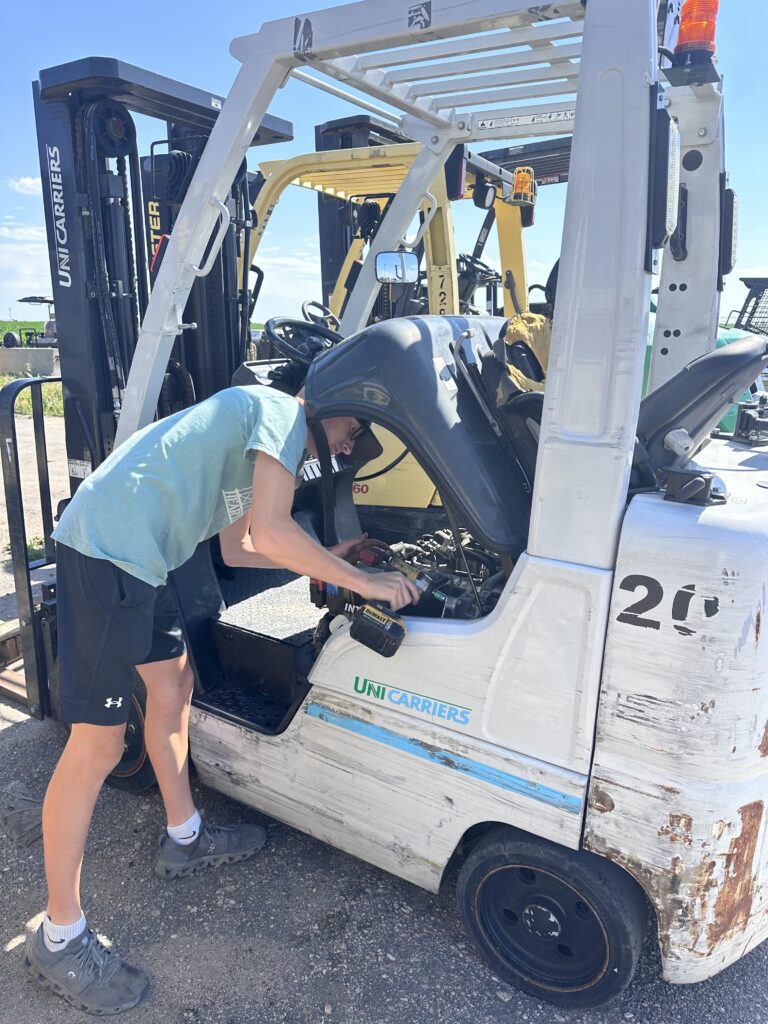
Brayden Ogorzolka is working on remounting a battery mount on a unicarrier forklift at his parents’ business, Ogorzolka Enterprise, where he will work while continuing online college courses– courtesy photo
Choosing a community college is also a good option for graduates who aren’t yet sure about a specific major. That was the case for Abby Nolan, who will enroll at SCC in Lincoln next fall and live in the on-campus dorms. She said that attending a community college first would help her decide on a major.
“I chose to go to SCC because it was a cheaper option, and it just made more sense for me financially to get my general education at a community college rather than a four-year college. Eventually, I’d like to transfer to a four-year college at some point,” said Abby. This summer, she has a job at Seven Brew in York and has already arranged to be transferred to a Lincoln location to work while taking classes at SCC.
Emphasis on Career Training for Post-College Employment
Another trend, nationwide and at Heartland, is that more graduates are choosing to attend community colleges to learn a trade. The 2026 graduating class lists eight students who will attend trade school in HVAC, Auto Collision Repair, Welding, Ag Management, Construction Management, and Powersports Tech programs.
Several Heartland graduates over the years have been awarded the Walter Scott Pathway Scholarship, which supports students pursuing up to a 2-year degree in skilled and technical fields.
This year, Will Regier and Leo McCormick were awarded this scholarship, which will cover their full tuition and fees, plus room and board for up to four consecutive semesters. They both will be attending SCC, majoring in HVAC & Refrigeration.
Kaleb Ostrander has worked at Hiebner Body Shop for the past three years and was encouraged by the owners to pursue a degree in auto collision and technologies at SCC in Milford. He said he never considered attending a four-year college.
“I always knew I wanted to attend a two-year school because I wanted to do the trades and work around cars. I work at a body shop, so I had a great opportunity to continue working there after college. I thought I might as well go for auto collision and repair, because that’s a good skill to have, and down the line I could start my own business with it,” said Kaleb.
Although Kaleb visited several other trade programs, he chose SCC because he had already taken their Gen Ed courses, and Lowell Hiebner, who he works for at Hiebner Body Shop, recommended their program as one of the best.
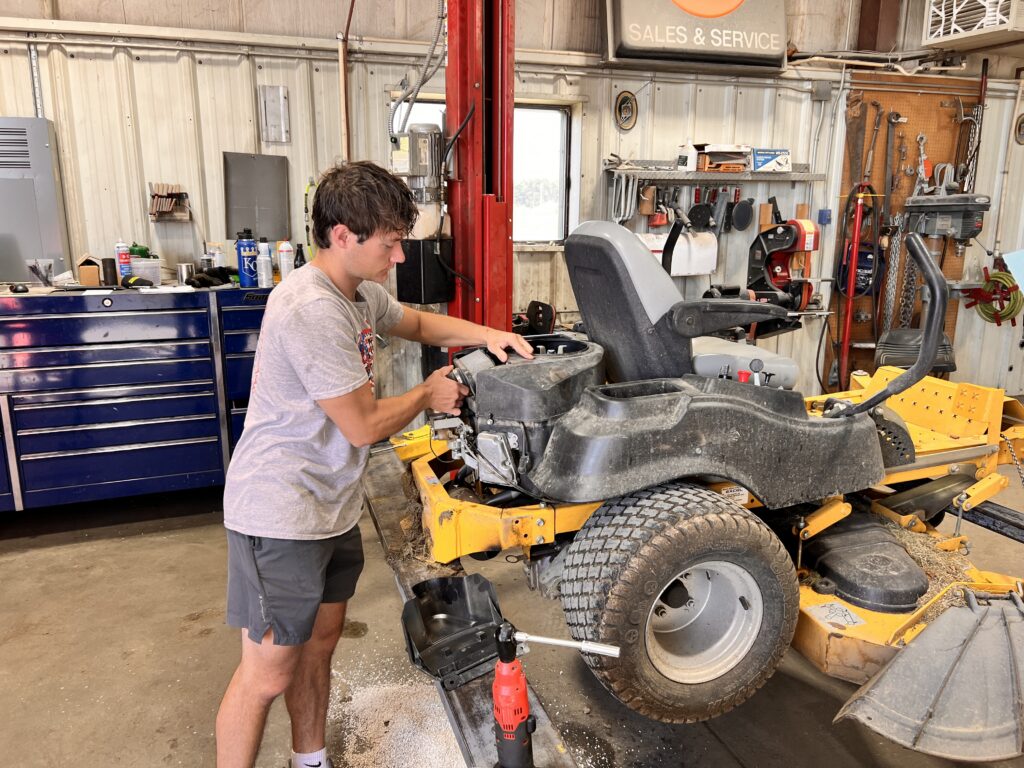
Kaleb Ostrander works on a Hustler mower at Hiebner Body Shop, where he has worked for the past three years – HeartlandBeat photo
Another 2026 Heartland graduate, Josh Goertzen, chose a trade school program at Northeast Community College after touring each college. He took several Gen Ed classes at SCC, and his brother, Jake Goertzen, just graduated from SCC at Milford with an associate’s degree in Applied Science in Diesel Technology.
“I like the idea of working with my hands, and after comparing the SCC and NCC programs, I chose Northeast, where I will major in Building Construction,” said Josh. He is also working within the field he’s chosen this summer for Juzyk Construction out of Aurora.
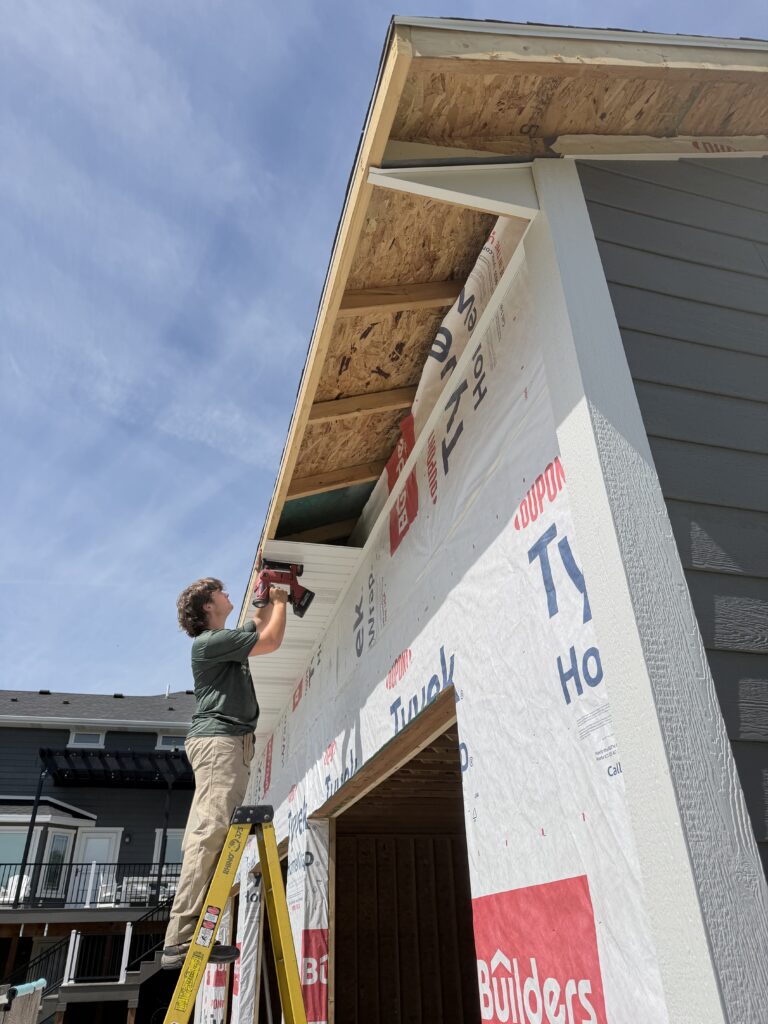
Josh Goertzen is on the job this summer, gaining hands-on construction experience with Juzyk Construction – courtesy photo
Future SCC York Regional Workforce Development Center
HeartlandBeat reported on the York County Development Corporation’s exciting news about a new SCC learning center being built in York. This partnership among York Public Schools, Southeast C. College, and YCDC will provide a space where students and adults can receive training in high-demand fields, including manufacturing, automation, technology, healthcare, and skilled trades.
“We, too, are excited about this project and how our students will be able to go there and take more classes. The kids are learning about the growing opportunities and needs of skilled jobs in the region, and having this center close to home is very important,” said Vnoucek
Two-Year Degrees Trending
The overall rate of high school graduates choosing to enroll in community college is rising, according to a report from the National Student Clearinghouse Research Center. The University of Nebraska Board of Regents just announced it will consider a 4.25% tuition increase during its next meeting on June 18.
It’s no wonder graduates are considering less expensive alternatives to a four-year degree to offset mounting student debt.
For some students, choosing a four-year college is the right choice, especially if they can secure scholarships. The trick is to take on as little debt as possible and weigh their college investment against potential future earnings. For others, a community college is a better fit. Heartland graduates have been provided with many resources and tools to determine which best meet their needs.
Kudos to Heartland students for utilizing the resources the high school offers, including college counseling and dual-credit courses. Heartland graduates are informed and display a strong work ethic as they seek degrees, training, and knowledge to enter the workforce. It’s also refreshing to see local businesses step up and provide job opportunities for these students.