




















York News-Times Reprint
TOMER RONEN Lincoln Journal Star

Lance Atwater puts about 200 gallons into his semitruck every other day as part of his farm operation in south-central Nebraska.
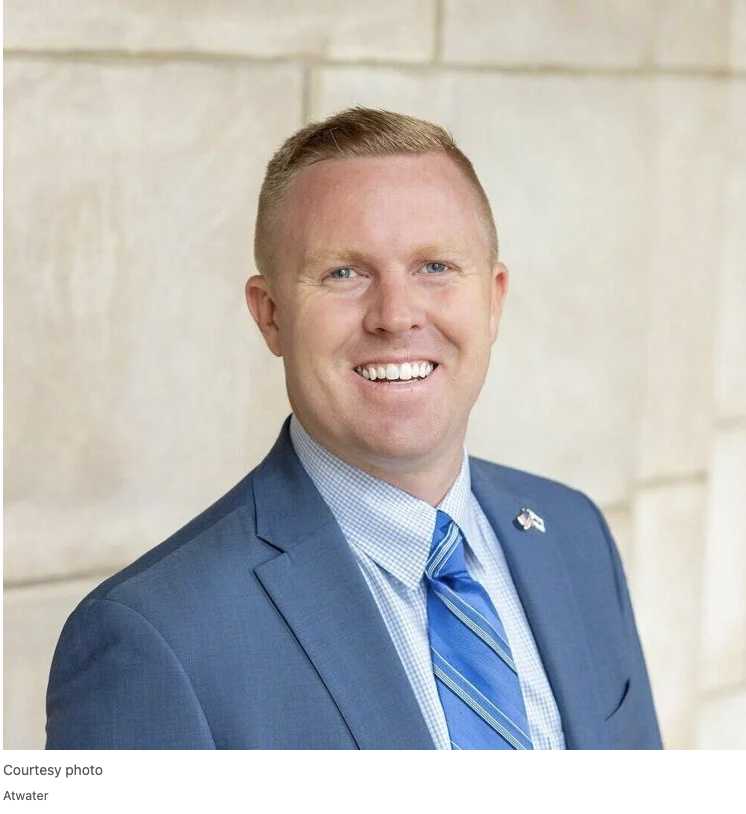
With diesel prices sitting at $5.95 per gallon as of Friday, according to AAA — compared to $3.36 at this time last year — that’s over $500 more per fill.
Mark McHargue, the president of the Nebraska Farm Bureau, usually spends between $15,000 and $20,000 on diesel at his farm near Central City in a typical year. This year, it’ll be closer to $30,000.
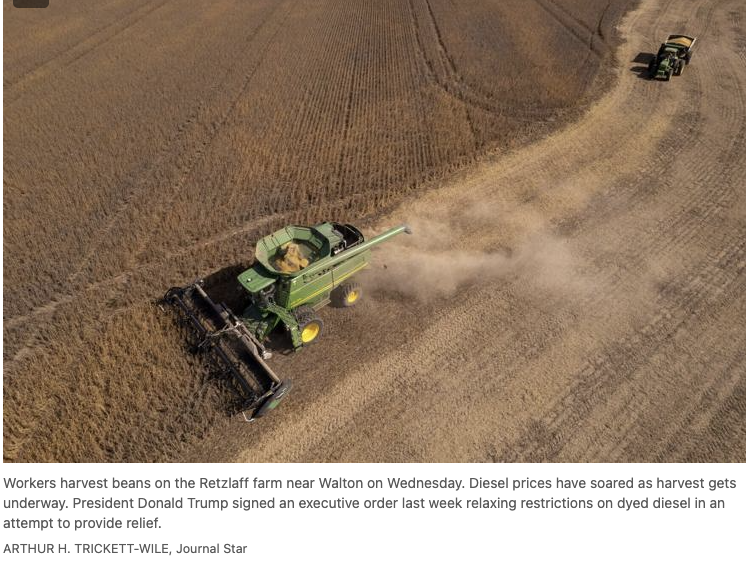
But at a rally last week in Grand Island, President Donald Trump signed an executive order allowing farmers and truckers to temporarily fill up with red-dyed diesel for highway use, hoping to ease some of that pain at the pump.
The move comes less than two weeks after Gov. Jim Pillen issued an executive order making diesel taxes paid while transporting Nebraska-produced agricultural products and livestock on state roads eligible for a refund.
Pillen’s order is set to go through Dec. 23. Trump’s expires at the end of the year.
Drivers are typically not allowed to use dyed diesel — tax-exempt diesel that is dyed red to distinguish it from regular fuel — other than for off-road uses.
The executive order was also endorsed by Republican Sen. Pete Ricketts, who said in a statement he appreciates “the administration’s willingness to find new ways to bring down costs for our farmers and ranchers during harvest.”
McHargue thinks the order will help save him about $1,000 over the next 90 days, at a time when farmers are already struggling to make a big profit, he said.
“When we’re at break even and you lose another $15,000, that eats into your family living budget,” he said. “It does make a difference.”
Atwater said the order could cut his costs by $2,000 to $3,000 a week.
Farmers typically get fuel in bulk, though people can fuel up with dyed diesel at regular truck stops.
But not every farmer is all in on dyed diesel. Ben Steffen, a Humboldt corn and soybean farmer who is the Democratic candidate for lieutenant governor, said the order would only save him $125 on fuel, which he called a “trivial amount.”
John Hansen, president of the Nebraska Farmers Union, said he was concerned with dye staying in his truck’s fuel tank long after Trump’s order expires, possibly putting farmers at risk for fines.
Bill Armbrust, a farmer and cattleman from Elkhorn, was also hesitant about putting dye in his grain trucks because of the effort to clean them out later.
Cody Thomas, a Nebraska State Patrol spokesperson, said the patrol will offer a grace period following the expiration of both orders.
And while Armbrust appreciates the effort to offer some relief to farmers, he said tradesmen and truckers are feeling the price increases even more than farmers.
“We’re glad to have the nod of the head that we’re having problems,” he said. “(But) it seems more like a political statement than it is actually doing anything for us.”
Over the past few years, farmers have faced rising costs for other supplies, such as fertilizer, seed and chemicals. And while soybean and corn markets have rallied, farmers have still had to sharpen their pencils when it comes to budgeting, Atwater said.
McHargue said he had to cut out upgrades to certain machinery from his budget this year because farm profit margins made it “tougher to pull that trigger.” The cuts have trickled down to equipment dealers, whom he said are suffering just as much as the farmers.
“There just isn’t a lot of money to do anything extra right now,” he said.
As the fall harvest kicks off, farmers across the state will be using more diesel fuel than at any time of year, Atwater said. In February, Atwater locked his diesel prices in at $2.68 for summer irrigation, but now most farmers are just trying to scrape by, not wanting to lock in a price in case the war ends and fuel costs come back down.
“If it keeps going up, it’s going to have a major impact outside of just agriculture,” Atwater said. “You think about how much stuff uses diesel, how much of our goods get transported by truck, it’ll have a huge impact if it continues to go up.”
In Grand Island on Monday, Trump said the war in Iran will soon be over, and gas prices will “come tumbling” with it. Both McHargue and Atwater are hopeful they do.
While Atwater said national security is important and he supports the Iran war, he couldn’t say for certain if the cost was worth it. He also thinks the prices aren’t sustainable.
“Hopefully this is going to be short-lived and we will see lower prices at the pump shortly,” Atwater said.
Ultimately, neither McHargue nor Atwater think it’ll change the way people in the agricultural sector vote in the November midterms.
“There’s also a lot of other factors going on,” Atwater said. “The people I’ve talked to … they’re going to look at the big picture of this, and they’re going to vote accordingly on how they’ve been impacted — whether it’s been positive or negatively of the policies over the past two years.”