
















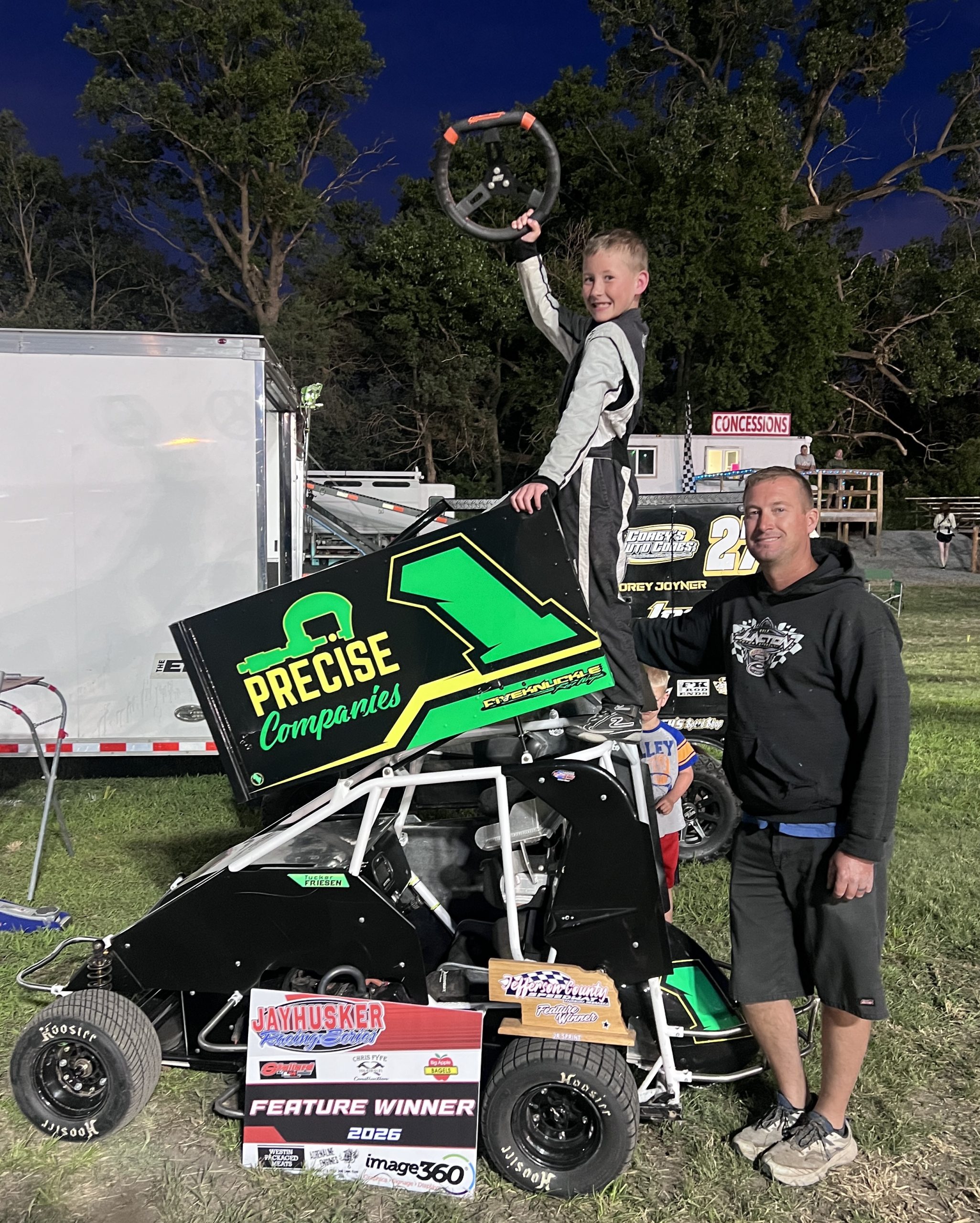
Tucker Friesen, a Heartland third-grader, is having the time of his life after winning another Junior Sprint Racing race this past summer!

Tucker Friesen has a sparkling smile and infectious enthusiasm when he talks about his racing career. At just eight years old, he consistently wins junior sprint races.
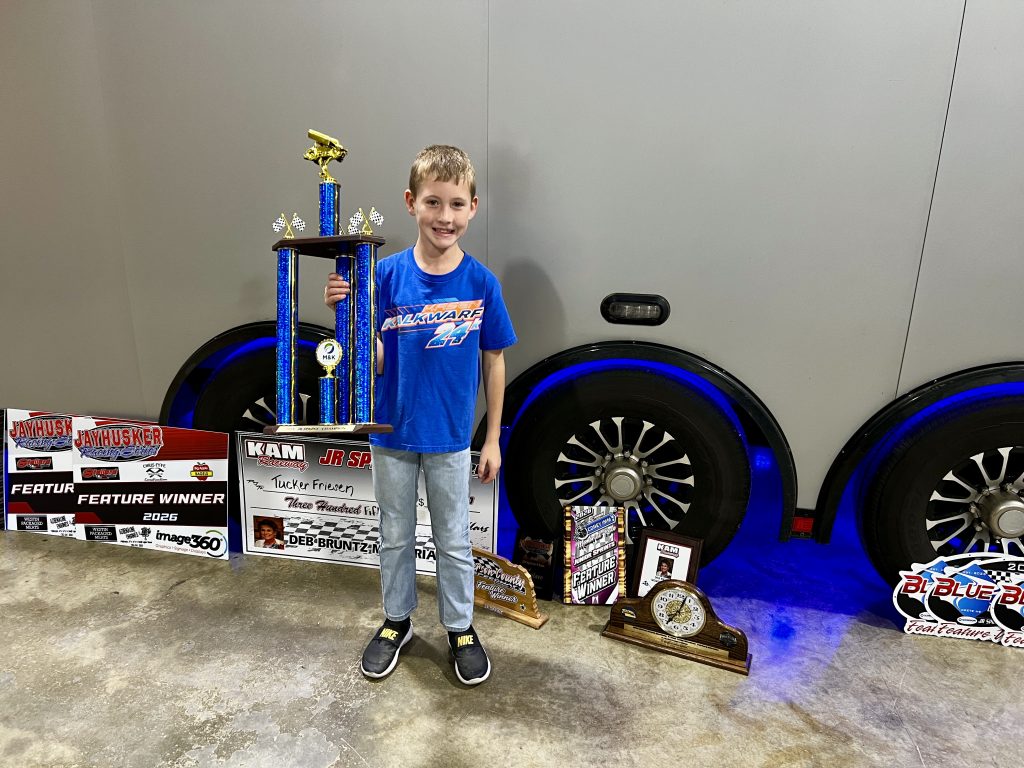
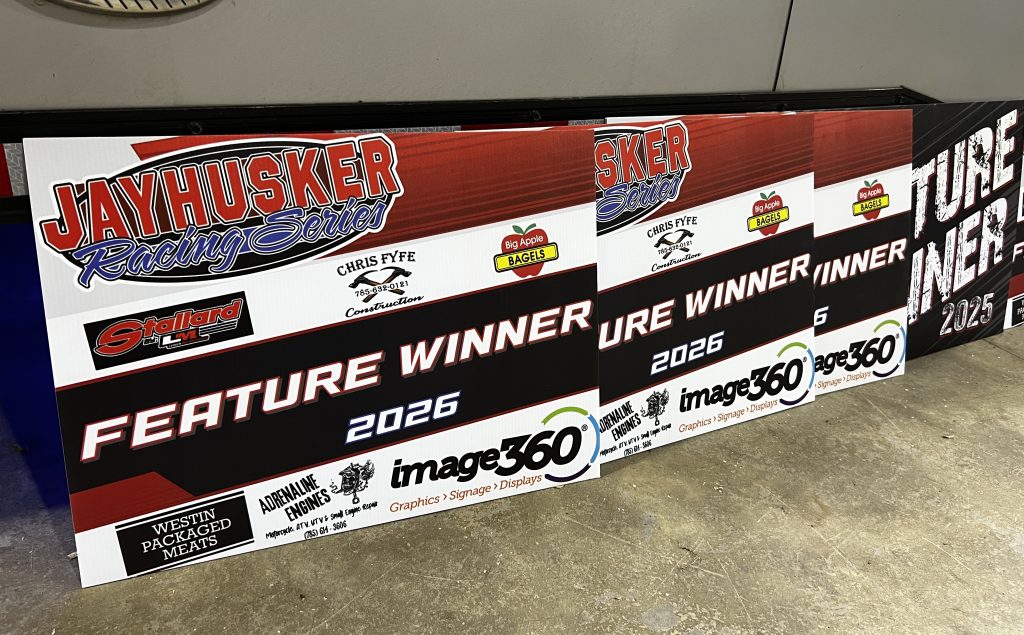
Over the past two racing seasons, he has recorded 13 wins in 24 starts, competing in the junior sprint class at tracks in Nebraska and Kansas.
You might say it’s in his blood, and it’s definitely a family affair, with his whole family involved in the sport.
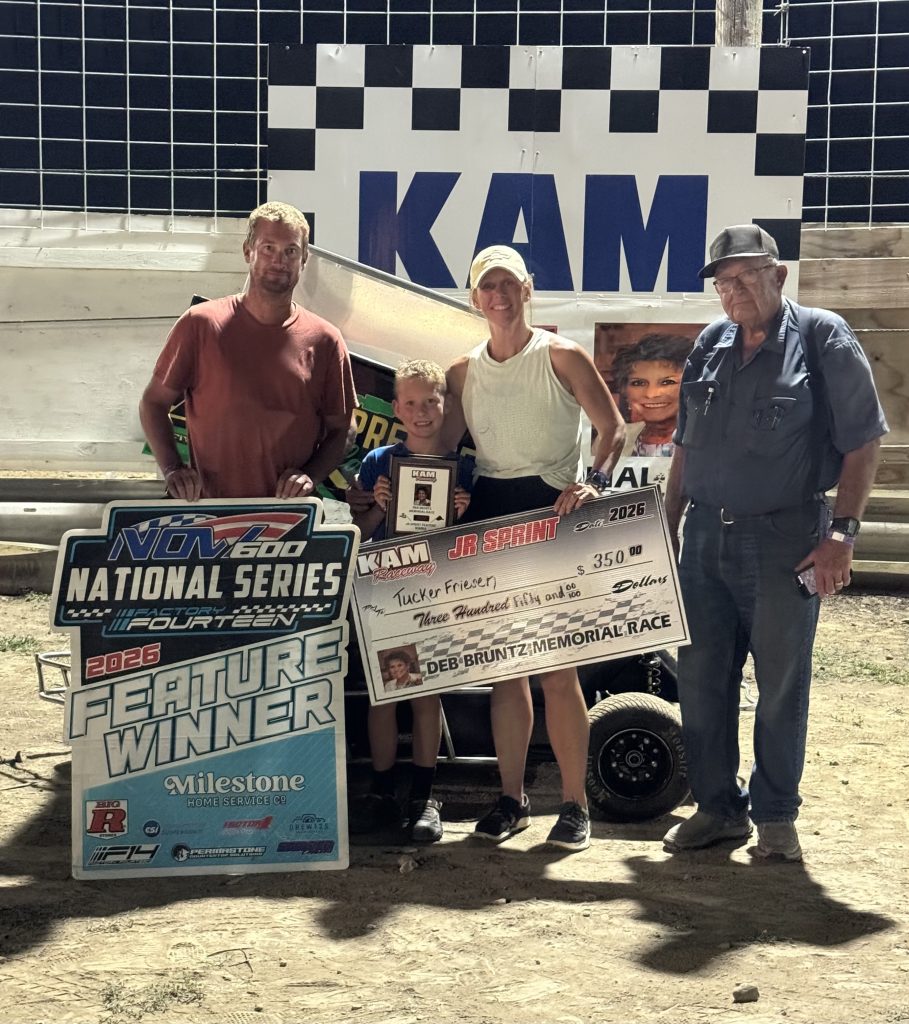
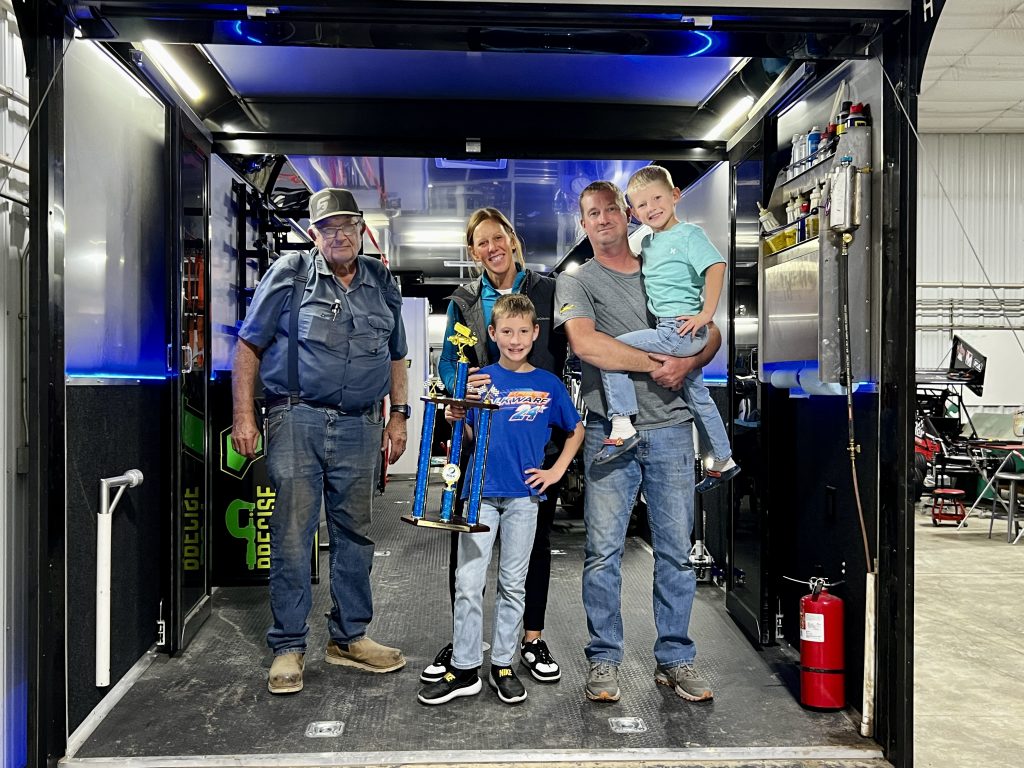
Tucker with another win with his mom and dad, Erik and Corrine Friesen, and grandfather Bob Friesen – courtesy photo
He is the son of Erik and Corrine Friesen, of Henderson, who both love and have backgrounds in racing. Erik grew up going to the track with his father, Bob Friesen, and did his share of racing when he was younger. Tucker’s grandfather, Bob, has always loved racing and is the master mechanic, keeping the motors clean and fine-tuned for the next race.
“This year we had quite a few rainouts, so we couldn’t race,” said Erik. They call his junior sprint a “car,” which they bought in California and then assembled and fine-tuned with help from his Dad, Bob Friesen, and friends Jason and Jadyn Friesen from Sutton.
A typical race night includes a round of hot laps or, qualifying, six- to eight-lap heats, followed by a 12-15 lap feature race. Features can draw about six to eight cars, or up to 12 in the Jay Husker series. To begin a race, Erik uses a 4-wheeler to push Tucker’s car up to the starting line to prevent wear on the car’s clutch.
Tucker’s racing season runs from mid-April to early October. Racing weekends often include Friday night on a dirt track in Hastings, Saturday at Fairbury, NE, Clay Center, KS or Washington, KS, and Sunday at Crete, NE. He’s also competed at Garden City and Concordia, Kansas.
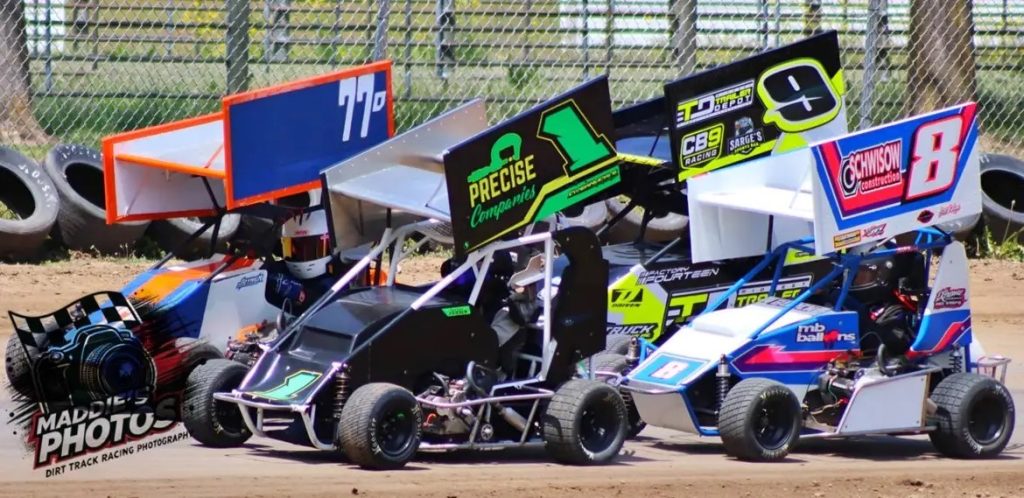
Tucker won two championships this year for the most points accumulated during the season.
“My favorite race was at Fairbury, where I won in front of a large crowd, and it was very close. I was racing against my friend and on the last lap I ran over his tire and kind of got locked up, but I ended up winning the race, with everyone cheering for me,” said Tucker.
After every race, Erik checks the car and keeps plenty of parts on hand for maintenance and repairs. They travel with a 34-foot-long race trailer equipped with a shop where Erik can work, plus plenty of room for their car, four-wheelers, tires, and equipment.
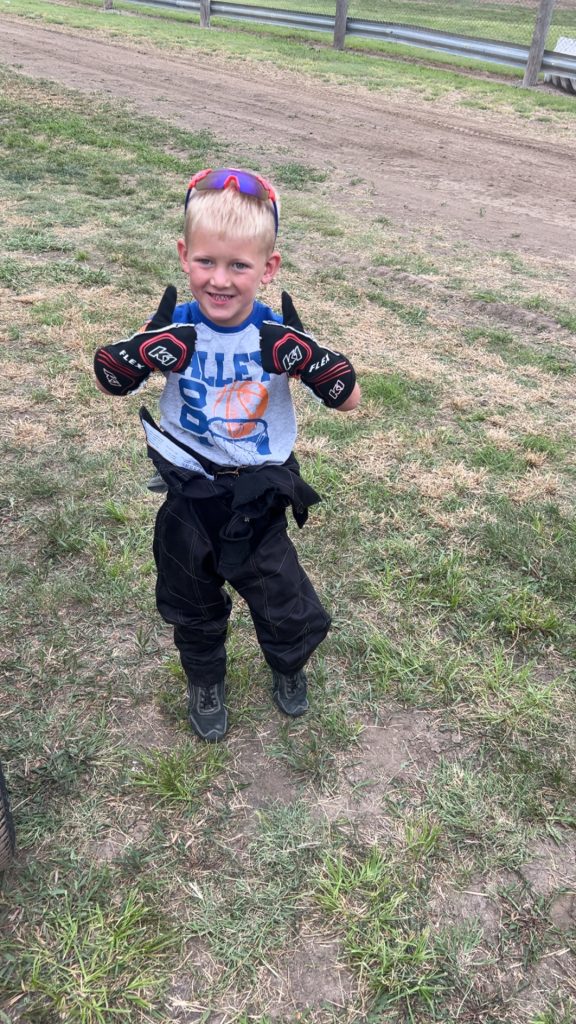
Safety is important, and Tucker wears a fireproof suit, helmet, and neck and arm restraints for all his racing.
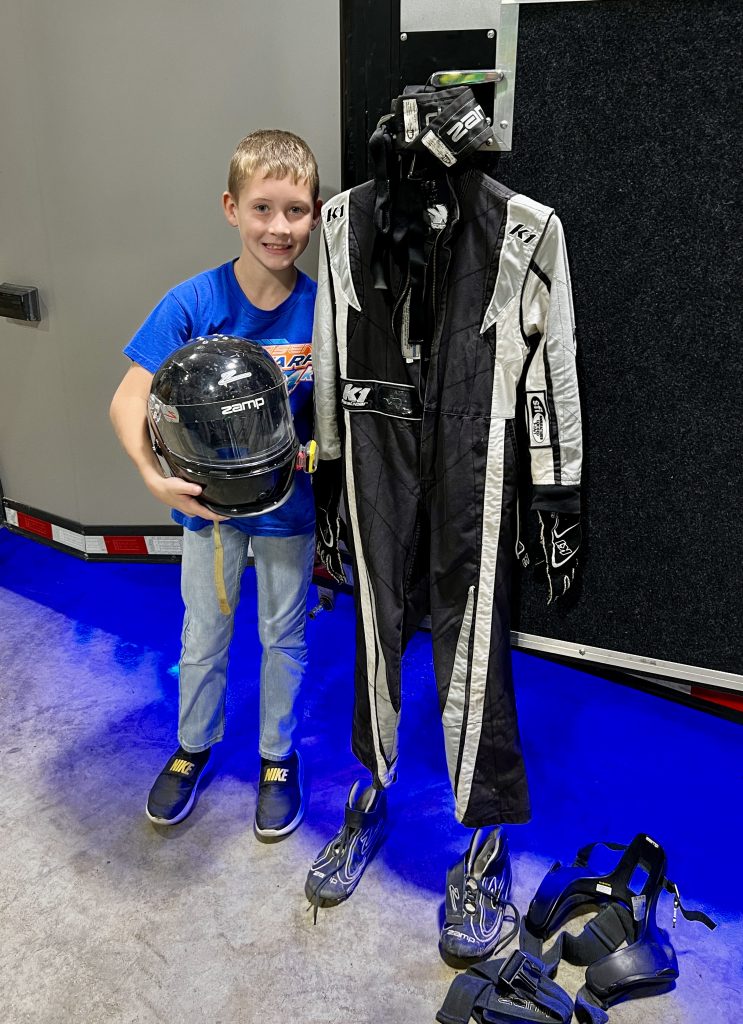
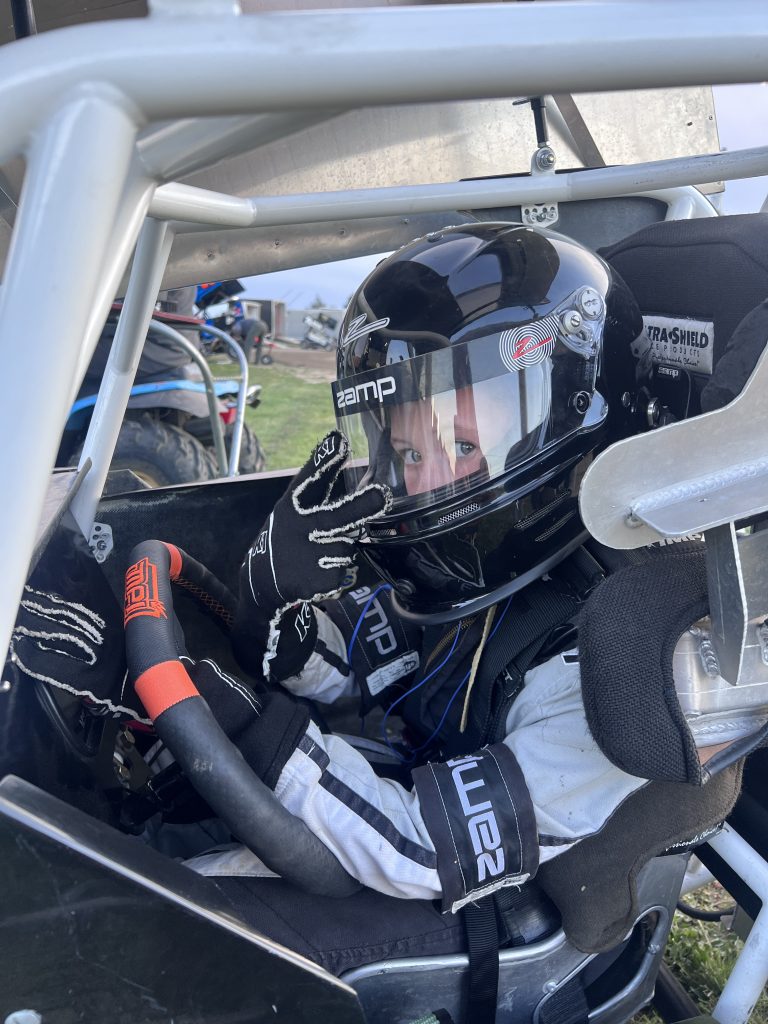
“I had one wreck before when I slammed into the wall at Clay Center and the wing got damaged,” said Tucker. “He didn’t have much time to think about whether he was scared or not, before we got the car up and I told him, ‘Get back in. Let’s GO!’” said Erik.
“I tell people that with all the protection in this sport it’s probably safer than driving a four-wheeler on the farm,” said Corrine. The car has a red lever that, when pulled, releases all the restraints so the driver can exit quickly. Tucker also wears a headset that allows one-way communication from racetrack officials, who can let him know about problems on the track or in his car during the race.
Technology plays a big role in racing today. His car has a transponder on the back that provides live lap timing for scoring officials. His car also has a Mychron data logger that provides real-time data while he races. After every race, Erik can review the data logger’s analytics and make adjustments accordingly.
“I can look at his RPM, speed, brake and throttle positions, and even his grip level, which helps him be a better driver,” said Erik. Most races are livestreamed, so fans can watch on the DirtCrown TV app or follow live lap timing in the My Race Pass app.
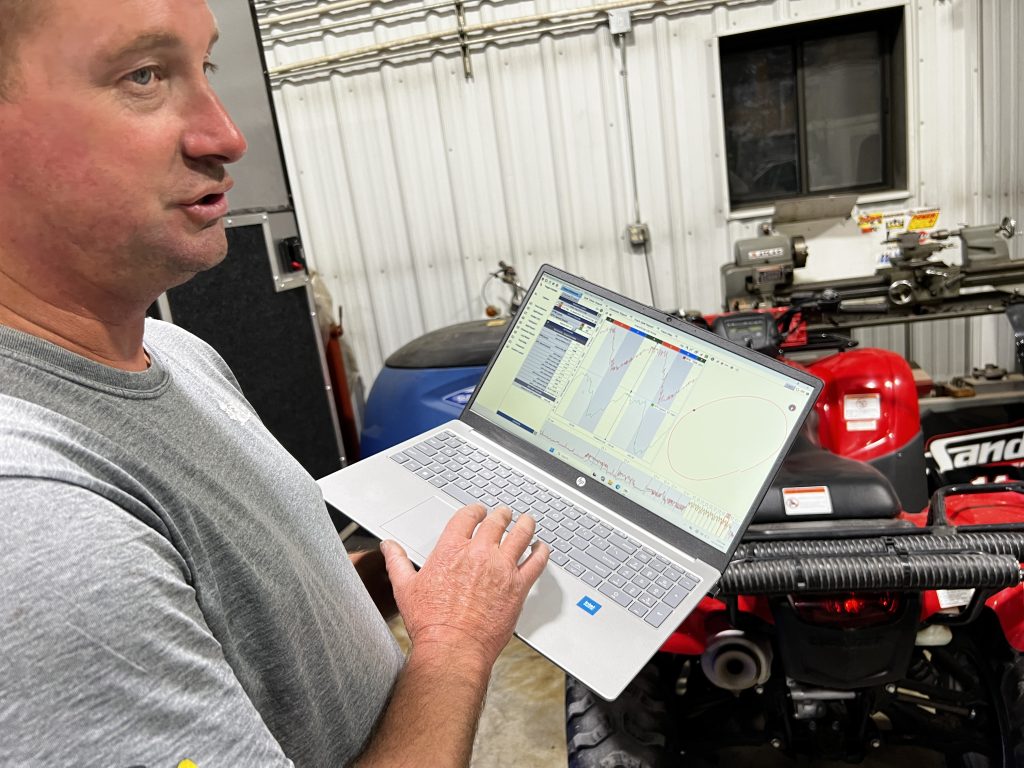
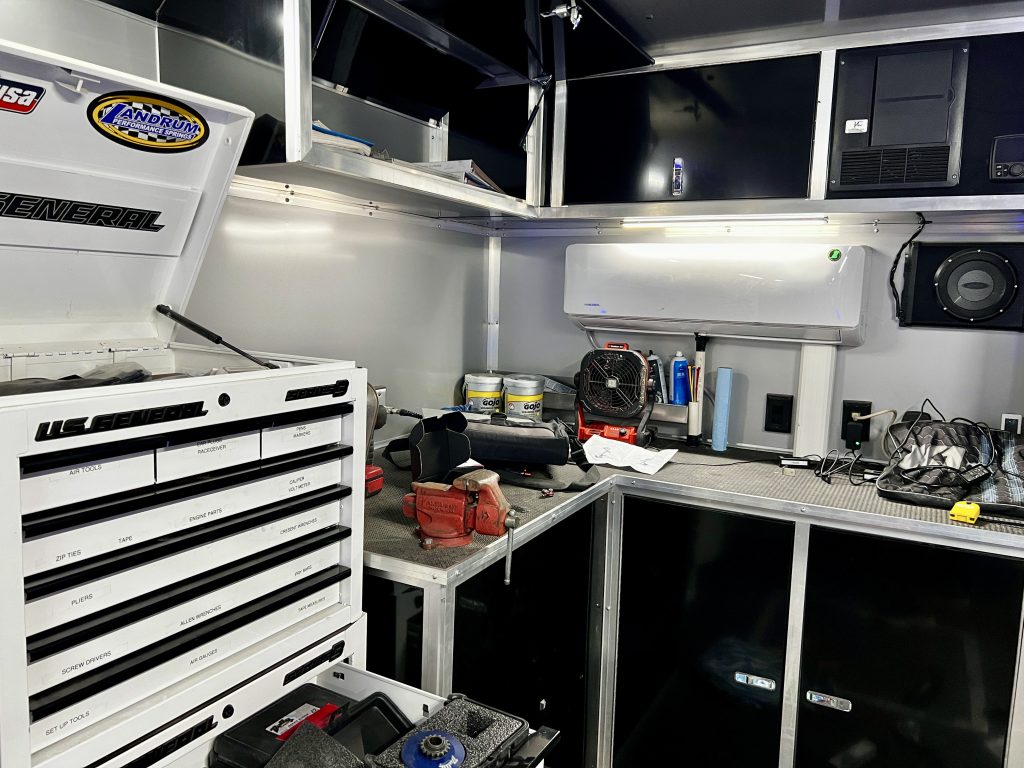
Erik explains how he analyzes post-race data on his laptop, and here is his shop inside the racing trailer – HeartlandBeat photos
It’s a family commitment involving travel, expenses, and maintenance, but Erik said it’s well worth it. “As long as Tucker is excited about continuing to race, we will keep doing it.”
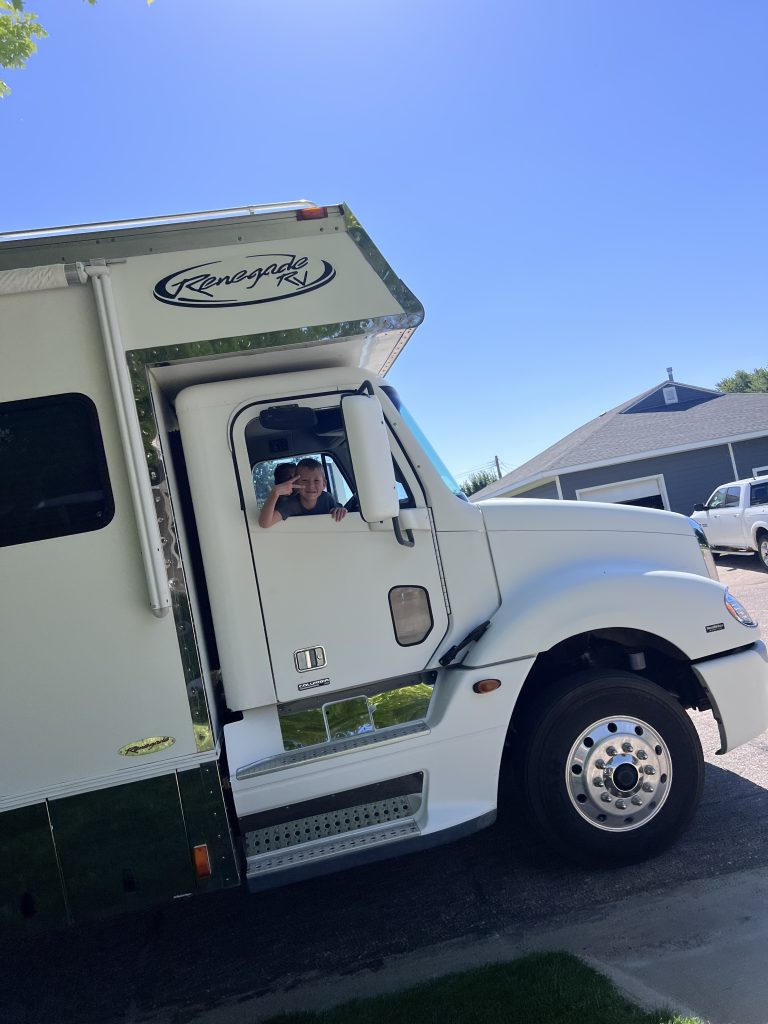
They use an RV to tow the trailer, which makes overnight stays at the tracks easier. Tucker has a younger brother, Meyer, who is five, but he’s already gotten his feet wet in racing and will most likely follow in his brother’s footsteps.

Tucker’s car features a locally made Bully Clutch from Buller Built. Erik worked at Buller Built in high school, where he learned more about racing and, more importantly, go-kart maintenance.


Tucker definitely has expanded his horizons as an eight-year-old and is proud of the autograph from a competitor’s famous father. He raced against NASCAR driver Kyle Larson’s daughter and finished third behind her this summer.
Over the past two years, Tucker has made many new friends in the racing world and enjoys hanging out with them, even though they compete against each other.
Although Tucker’s racing season has ended for this year, he’s pushing his dad to build a practice track on the family farm west of Henderson. A practice track would make it easier for Tucker to work on racing techniques than during a real-time race.
Tucker has learned many life lessons through racing, his father said. When he gets frustrated, he’s learned how to take deep breaths and stay calm. He’s looking forward to racing at new tracks next season, and with his family’s support, he’ll likely have many more wins ahead!