





















Written by Jenny Brehl

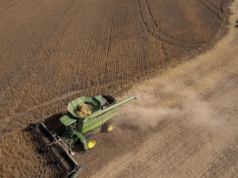
This harvest was a difficult one, plagued with breakdowns, slow-going in storm-damaged corn, and disappointing yields. While there were a few reports of decent yields, the overwhelming majority of farmers and seed dealers in the area have been disappointed. Honestly, I was worn down and needed a mental break before I could address this in writing. I asked Dr. Roger Elmore, Dr. Tom Hoegemeyer, Dr. Bob Nielsen, and Dr. Eric Hunt if my reasoning was on track and for their additional thoughts and am grateful to them.
Major Point: People are looking for solutions, but increased nitrogen rates, more fungicide applications, and tillage are not the answers. What went right? Balanced nutrient management with reduced nitrogen inputs, TIMELY fungicide application, and proper irrigation management are future keys.
We began the season with dry planting conditions. I was arguing we were potentially drier than Spring 2023 with the observations about rye and pastures not growing. Crops went into the ground quickly without cold snaps. Several farmers were completely done planting in April. Irrigation began early to get moisture into seedbeds and to activate herbicide. Plant stands and emergence were uneven, evidenced again at harvest with varying ear sizes and plants with ears that didn’t pollinate. I think that impacted us more than we realized. The Memorial Day weekend rains saved us.
A relief was that rain kept falling in spite of it varying greatly in timing and amounts. Some experienced higher non-irrigated yields in corn and soybeans compared to irrigated fields. That nearly always is due to too much irrigation and timing of those irrigations, often occurring right before a significant rain event.
We had a few wind/hailstorms in July and the fairly widespread Aug. 8-10 wind/hail event, which York Co. escaped. Much of the year we received lower than average solar radiation (which includes photosynthetically active radiation or PAR). There were several periods of cloudy/hazy/smoky days. Research utilizing shade cloth revealed 25-30% potential yield loss with shading occurring from R2-R6 stages in corn. As Dr. Roger Elmore pointed out, the hybrid maize model was predicting average yields at the end of the growing season in spite of the low PAR, which would suggest biotic (living) factors being the greater issue. Photosynthetic stress on plants can also include southern rust impacts on leaf tissue and stalk rots. I’m wondering if irrigation prior to heavy rain events exacerbated the fusarium crown rot/gibberella stalk rot we saw? Dr. Tom Hoegemeyer wondered the same thing. “Photosynthetic stress and stalk rot go together like beans and weenies. Each one can cause the other. We MAY have had some early infection with Fusarium/gib due to saturated soils/etc. As you know, high N rates, lower K available and a dozen other stress sources make it worse.”
High night-time temperatures burn sugars that should go into ears to fill kernels. I mentioned my concern about this throughout July and August. By mid to late August, ears began pre-maturely drooping, cutting off the food supply to kernels. Looking at kernels in numerous fields at harvest time, they appeared shriveled/pinched at the base. Dr.’s Tom Hoegemeyer, Roger Elmore, and Bob Nielsen all attribute that to stress occurring before black layer in which the kernels prematurely died before completing the normal black layer process. I feel the greatest contributors of this were the high night-time temperatures and the stresses of southern rust and stalk rots. Dr. Eric Hunt also mentioned the high humidity, particularly in York County due to the sheer amount of irrigation which may have led to increased disease pressure including stalk rots.

Dr. Bob Nielsen: “Your description of the kernels makes me think that kernel development was prematurely halted. Although, honestly, severe reductions in photosynthetic leaf tissue prior to BL (black layer) due to southern rust etc. or early onset of severe stalk rots would also prematurely shut down kernel development. And, of course,…(large) ears with excellent kernel set create a huge demand for photosynthate during grain fill, which exacerbates the negative effects of severe loss of photosynthetic leaf tissue and predisposes the stalk and root tissue to rapid fungal rot infection and development.”
Dr. Tom Hoegemeyer summed it up: “I think we had lots of issues that caused PS (photosynthetic) stress, some of which impacted our irrigated acres worse than our dryland acres. (My home dryland area had lots of 200 to 220 bpa corn and 65 to 70 bpa soybeans. After a dry spring, we had more rain than we’ve had for years). Irrigated corn in the area often wasn’t as good as the dryland, even with more N applied. The more stressors (hot nights, light limitations, too high N for the amt of light/PS–exacerbating disease issues, multiple leaf diseases combined with high humidity, continuous corn, etc.) the bigger the yield loss. And, in some instances, I think adding water to these fields hurt more than it helped.”


Sources:

York: -21 MJ/m2
Grand Island: -9.7 MJ/m2
Lincoln: -25.2 MJ/m2
Falls City: -28.3 MJ/m2
Norfolk: -10.7 MJ/m2
Wayne: +19.7 MJ/m2
West Point: -1.3 MJ/m2″