




















Risk management climate on farm keeps evolving

Reprinted from Nebraska Center for Agricultural Profitability
Written by Brad Lubben
Policy Report: It’s a tale of two operations these days, with different risks for crop producers and livestock producers.
I have previously described the ag outlook in 2025 as a tale of two farms — or more specifically, a farm and a ranch — as farm income prospects seem to be going in different directions for crop producers and for livestock producers, specifically cattle producers.
Crop producers have been facing declining prospects for several years as prices have trended down, even as costs have remained sticky at high levels and profit margins have been squeezed.
Cattle producers have benefited from record prices and revenues, although those high prices in large part are a response to reduced herd numbers, and opportunities to grow the herd have been clouded by grazing conditions, cash flow and long-run price expectations that could limit enthusiasm for rebuilding the herd.
Agricultural policy developments have helped the outlook over the past few months. Emergency economic assistance passed in late 2024 has already provided substantial cash flow in 2025 for crop producers, and ag disaster assistance for crop and livestock producers adds to 2025 prospects as well.
The reconciliation bill signed into law July 4 also adds to the outlook by increasing the farm bill safety net of commodity programs, crop insurance, and ag disaster assistance, among other provisions.
Related:2025 net farm income forecast: Partly to mostly cloudy
Update on ag risk
The uncertainty for agriculture is not only limited to markets, finance and government policy. Farmers and ranchers face a wide range of risks, including production, marketing, financial, legal and human risks.
Going into 2025, many or even most producers were concerned about drought across the region and its impact on both crop and livestock grazing potential. Timely rains or storms that netted more beneficial rain than damaging wind and hail have helped many producers with production risk.
Making sound risk management decisions for production plans, crop insurance purchases and more have also helped producers address production risk this year.
On the marketing side, producers may be assessing the status of their marketing plans, hopefully balancing their marketing and pricing decisions to date with their expected production and remaining price risk exposure.
The price and revenue risk management strategy for crop producers involves a complex mix of federal farm programs (Agriculture Risk Coverage or Price Loss Coverage), crop insurance — including the most widely used Revenue Protection crop insurance policy — and marketing decisions.
All of those programs and decisions affect a producer’s price and revenue risk exposure and can provide substantial downside market price risk management, particularly after the increases added in the reconciliation bill.
Related:What’s in the Big Beautiful Bill for agriculture?
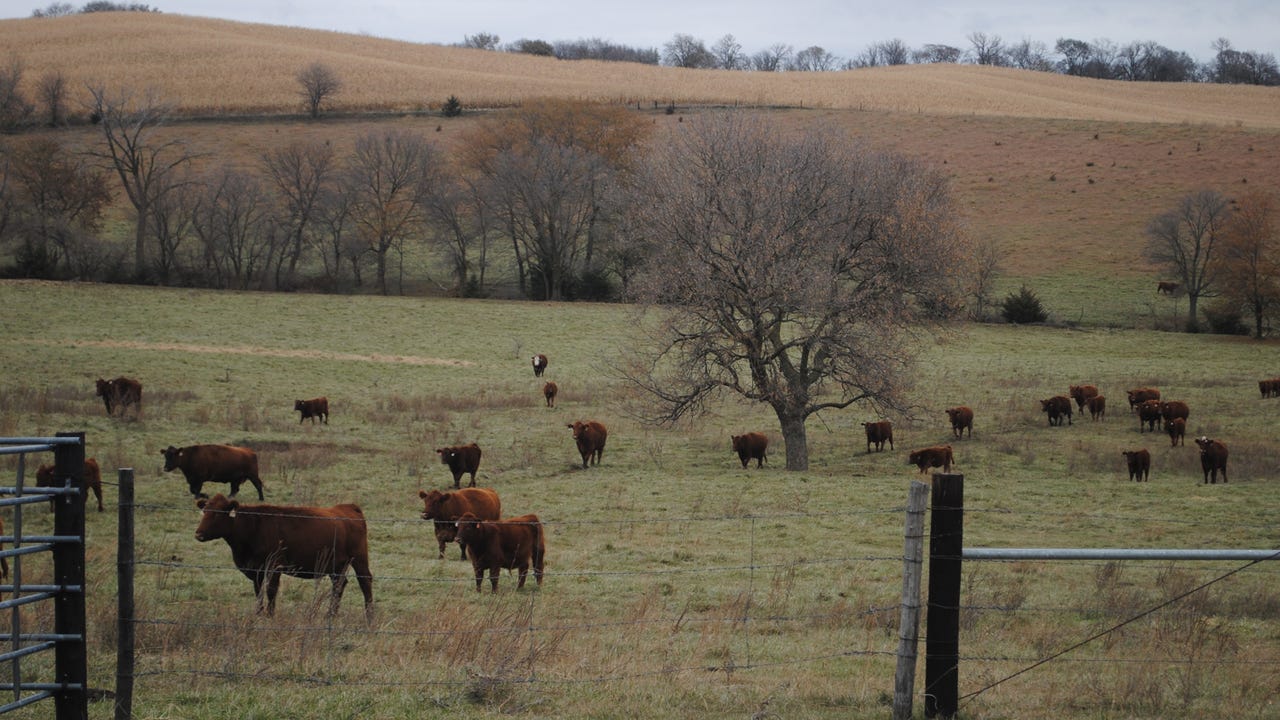
GOOD OUTLOOK: Cattle producers, unlike crop producers, are enjoying record-high market prices, improving their outlook at least in the short term.
Mixed bag
The financial picture as described above is mixed for crops versus livestock. Regardless, producers need to focus on working capital, cash flow and potential borrowing needs amid higher interest rates as they face tightening margins or long-run production decisions.
Sound financial risk management depends on good records, cost-of-production analysis, and financial statements and analysis to make informed decisions and position an operation for financial stability and viability.
The legal risk environment may be as uncertain as any at the present time. Recent emergency legislation and reconciliation legislation have added some stability to financial and tax expectations. However, continued uncertainty and even volatility with trade policies, labor and immigration policies, and government programs and restructuring add to the risks producers must manage in their operations.
Human risks involve both the day-to-day labor and management decisions, and also the long-run strategic decisions that may ultimately be the most critical to the success and the long-term viability of the operation.
Related:What do rural Nebraskans care about?
Labor management has been stressed amid a time of rising costs, decreased availability and legal uncertainty for operations working with immigrant labor. Effectively managing labor, whether hired or family, is vital to keeping the operation running smoothly. It is also critical to address personal and family health and well-being and identify available resources and tools.
Unique risks
The wide range of risks described above are just some of the risks that agricultural producers face and demonstrate the need for sound risk management planning, decision-making and education. But they don’t even include some of the unique risks that producers face when they work with or produce something outside of the traditional, commercial-scale, commodity-focused ag system that we know so well.
Those producers often face additional challenges because of the scale or scope of what they produce and how they market it. Small, diversified and direct marketing operations often face different risks and need different tools to manage production and marketing risk.
Their risks often include the general overriding question of access, where access to land and access to capital are known constraints, but access to programs and access to markets can be challenges as well.
Helping the full range of producers prepare for, adapt to and overcome these challenges is part of the broad educational mission of the Extension Risk Management Education program. The University of Nebraska-Lincoln hosts the North Central ERME Center, one of five risk management education centers around the country, competitively funded through USDA’s National Institute of Food and Agriculture.
The fundamental purpose of the ERME program nationally is to support local programs that reach producers with the education they need and demand. Those programs, in turn, help producers gain the knowledge and skills to understand risks facing their operations and to develop and implement the practices to address them.
The North Central ERME Center has been awarded funds from USDA since 2001 to deliver this support through a regional competitive grants program and expects to announce its next round of funding opportunities in September for educators and groups looking to deliver education to producers in the coming year.
For those interested in delivering education, for producers interested in educational projects, and for those interested in the results of more than 500 funded projects to date, we invite you to visit the center website at ncerme.org and the national program website at extensionrme.org